Emergency 24/70117 84 84 84229/10 St. Joseph Street, Negombo
St. Joseph Hospital, to live is a privilege

Book an appointment

Same-day slots at the OPD, and online booking around the clock.

Free OPD consultation. Corporate insurance accepted at the OPD.
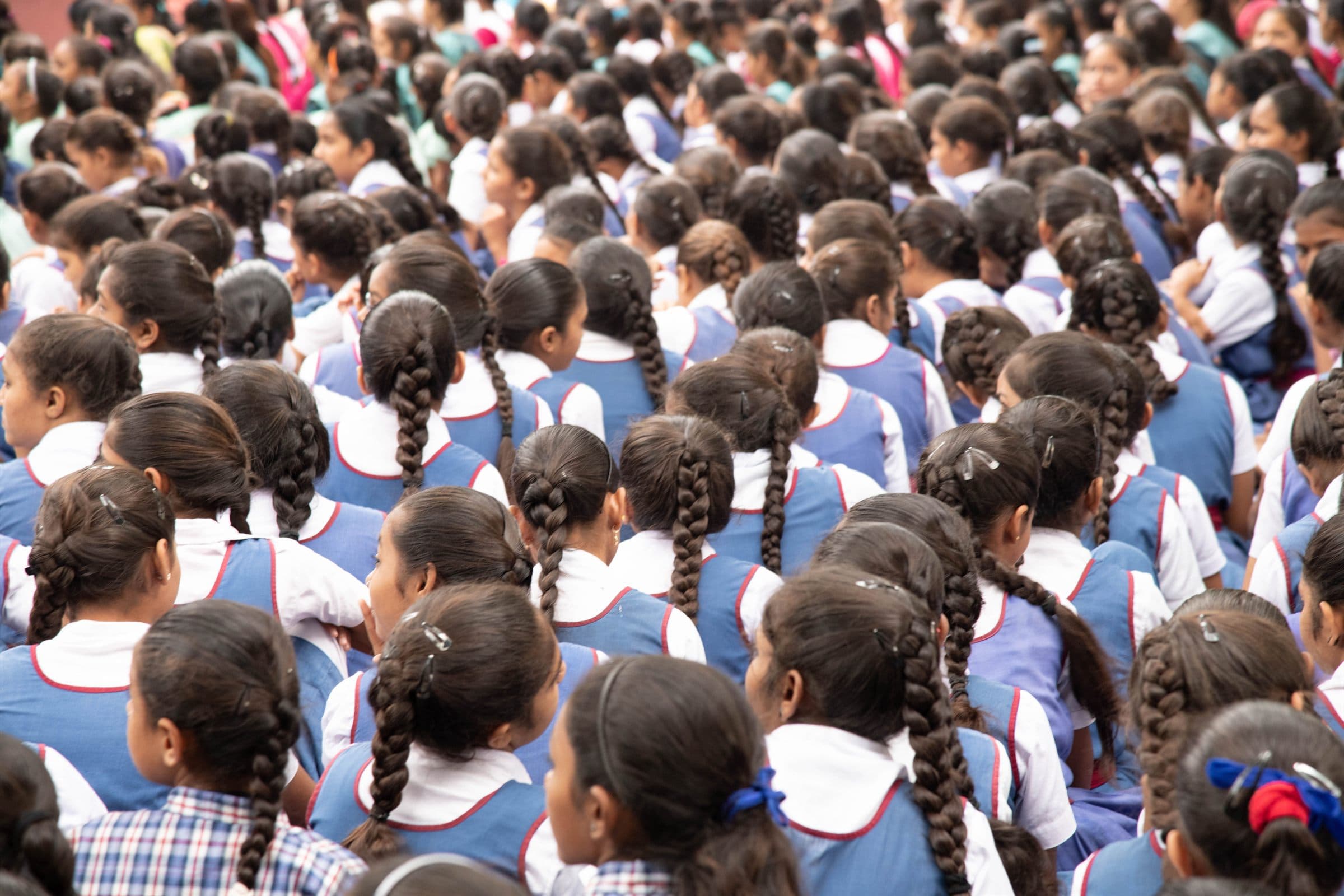
A school assembly of students in uniform seen from behind, seated in rows
HomeSchool Wellness

The problem
nobody noticed.

A child who cannot read the board is not slow. A child who falls asleep in class may be anaemic. Our team comes to your school, screens every student, and tells you which ones need a doctor.

Where it happens
At your school, not ours
A screening day
Up to 300 students
Every child leaves with
A sealed report home
Aligned with
National school health
Vision and hearing✦Height, weight and growth✦Dental check✦Spine and posture✦Anaemia screening✦Teacher first aid training✦Dengue in the school grounds✦
01 / Why school, not clinic

The children who need it most never come in

A family brings a child to hospital when something is obviously wrong. Nobody brings a child because they might need spectacles, or because their haemoglobin might be low. Those conditions are silent, they are common, and they quietly cost a child years of schooling. The only way to find them is to go where all the children already are.

What we typically find
  • Children sitting at the back who cannot read the board, and nobody had tested them
  • Untreated dental caries, by far the commonest finding at every age
  • Low haemoglobin, especially in adolescent girls
  • Growth outside the normal range in both directions, underweight and obese in the same classroom
  • Hearing loss after untreated ear infections, mistaken for inattention
02 / The screening

Nine stations,
one morning

Set up in a hall or two classrooms. Children move through in class groups, so no lesson loses more than half an hour.

01VisionDistance acuity both eyes with a Snellen chart at six metres, near vision, squint and colour vision. Any child below the threshold is referred for a proper refraction.Catches: the back row problem
02HearingWhisper and tuning fork screening, with otoscopy to look for wax, perforation and glue ear. Children who fail go for audiometry.Catches: mistaken inattention
03GrowthHeight, weight and body mass index plotted on the child's own centile chart, not judged against a single number. Waist measured in the senior grades.Catches: stunting and obesity
04DentalA look for caries, gum disease, fluorosis and malocclusion, with fluoride advice and brushing technique demonstrated on the spot.Catches: the commonest finding
05AnaemiaHaemoglobin by finger prick where the school requests it, with parental consent. Adolescent girls are the priority group.Catches: the tired student
06Spine and postureForward bend test for scoliosis, plus posture, gait and flat feet. Picked up in the growth spurt years, this is often correctable.Catches: scoliosis, early
07General examinationHeart sounds, chest, thyroid, lymph nodes, skin and a look at the abdomen, behind a screen with a same sex staff member present.Catches: the unexpected murmur
08Vaccination recordThe immunisation card is checked against the national schedule and gaps are listed for the parent, with where to catch up locally.Catches: the missed dose
09Wellbeing conversationA short private conversation in the senior grades about sleep, screens, mood, bullying and exam pressure. Voluntary, and never reported back to teachers.Catches: what nobody asks about
03 / By age group

Different
ages, different
worries

The national school health programme concentrates on Grades 1, 4, 7 and 10. We follow that rhythm and add what the school asks for.

Grade 1The first proper look

For many children this is the first health check since infancy. Vision and hearing matter most here, because a child who cannot see or hear the teacher in their first year rarely catches up later. Growth, teeth and the vaccination card are checked, and any congenital problem missed in infancy tends to surface at this station.

Grade 4Habits taking hold

Dental caries and weight are the story at this age. Diet and activity patterns set now largely persist, and this is the point at which a nutrition conversation with the parent still changes something. Vision is rechecked because short sightedness commonly appears between seven and ten.

Grade 7The growth spurt

The scoliosis screening matters most in this band, because a curve found during the growth spurt can often be managed with bracing rather than surgery. Anaemia screening starts in earnest, and menstrual health is discussed with the girls in a session of their own.

Grade 10Exam year pressure

Physically this band is straightforward. What is not straightforward is sleep, stress, posture from long hours at a desk, eye strain, and for some students the first use of tobacco or alcohol. The wellbeing conversation carries more weight here than any measurement.

Sports teamsBefore the season starts

A pre participation check for any student in a school team: heart sounds and rhythm, blood pressure, a history of fainting or chest pain during exertion, previous injuries and joint stability. Sudden cardiac events in young athletes are rare and this is how the rare case is found.

04 / For the staff room

Train the adults
who are there
first

When a child collapses on a Tuesday afternoon, the person kneeling beside them is a teacher. These sessions run free of charge for schools on the programme.

Half a dayFirst aid for teachersBleeding, burns, fractures, choking, seizures and fainting, practised rather than lectured. Every participant handles the scenario themselves.All teaching staff
Two hoursBasic life supportChest compressions and rescue breathing on a manikin, plus how to run an emergency until the ambulance reaches the gate.Sports and science staff
Two hoursThe child who is unwellRecognising the child who needs a hospital today rather than a lie down in the sick room. Asthma attacks, dehydration, high fever, allergic reactions.Class teachers, matrons
One hourSick room auditWe review your sick room stock, expiry dates and records, and leave a written list of what is missing and where to buy it locally.Whoever runs it
05 / The school grounds

Dengue is a
school problem

The mosquito bites in daylight, which means children are bitten at school, not at home in bed. A single blocked gutter or a tray under a potted plant in the corridor can supply a whole class.

We walk the premises with your caretaker, mark the breeding sites on a plan, and hand you a checklist your own staff can repeat weekly without us.

Where we usually find it
  • Roof gutters blocked with leaves after the monsoon
  • Trays under potted plants in corridors and the office
  • Discarded tyres behind the sports store
  • Uncovered water storage barrels and overhead tanks
  • Blocked floor drains in toilet blocks used rarely
  • Bottles, cups and lunch containers in rubbish heaps
  • Coconut shells and tree stumps at the boundary
  • Unused tanks, buckets and basins in the caretaker's store
  • Construction debris and cement mixing trays left standing
06 / After the screening

A screening
that ends in
a report is
half done

The point is not the data. The point is that the child with the low haemoglobin actually gets treated. Every flagged child is tracked until something happens.

Talk to the coordinator
  1. Same dayAny child needing urgent attention is identified before we leave, and the parent is telephoned that afternoon rather than sent a note.
  2. Within 10 daysEvery child goes home with a sealed individual report in the parent's language, stating what was found and exactly what to do next.
  3. Within 10 daysThe principal receives an aggregate report with no individual names: how many screened, and what proportion had each finding.
  4. Two weeksThe coordinator calls the parents of every flagged child to check the referral was understood and to help book the appointment.
  5. Six weeksA second call for anyone who has not acted. This is the step most programmes skip, and it is the step that decides whether the screening was worth anything.
  6. Next termFlagged children are rechecked at the school, so a spectacle prescription that was never filled does not disappear into the file.
07 / For principals and parents

Fair questions
to ask us

08 / Bring us in

One morning.
Every child
seen.

Tell us your student numbers and the term dates that suit you. We come and look at the hall first, then confirm a date. Schools in the Negombo, Katana and Kochchikade divisions are our priority.

  • Student numbers
  • Grades to include
  • A hall or two classrooms
  • Term dates

School screening complements, and does not replace, the Ministry of Health school medical inspection and the Public Health Midwife and Medical Officer of Health services in your division. Findings are shared with the school and the parent; onward notification follows the school's own arrangements with the area MOH.

WhatsAppCall us